

Table of Contents
- Why Handcrafted Cricket Bats Outperform Mass-Produced Options
- English Willow vs Kashmir Willow: What the Difference Means for Your Game
- Cricket Bat Willow Grades Explained: Which One Suits Your Game?
- How to Measure for a Custom Cricket Bat: A Step-by-Step Guide
- Comparing Handcrafted Cricket Bats: Prices and Features
- The Craft Behind a Handcrafted Bat: From Cleft to Crease
- How to Knock In a Cricket Bat: Protect Your Investment
- Looking After Your Bat Through the Season
- Where to Buy Handcrafted Cricket Bats in Australia
- Conclusion: Your Next Bat Awaits
- Frequently Asked Questions
Last updated: 8 October 2026
Why Handcrafted Cricket Bats Outperform Mass-Produced Options
A handcrafted cricket bat is a bat shaped, pressed and finished by hand from a single selected willow cleft, rather than turned out on a high-volume production line. That difference in process shows up in the middle: better balance, a truer pick-up, and a bat that feels made for your hands rather than for a warehouse shelf.

Mass-produced bats are built to a tolerance band, not to a player. The cleft is pressed on a fixed schedule, the handle is glued to a standard length, and the finished bat is graded by appearance. Handcrafted bats work the other way. At SGM Cricket Bats, every bat is shaped in our own Melbourne factory, from cleft selection through to final inspection, so weight, spine and handle can be tuned to how you actually bat.
The practical result is a bat that feels lighter than its sticker weight because the mass sits where you want it. A club player stepping up from an off-the-shelf bat usually notices the pick-up first, then the ping.
English Willow vs Kashmir Willow: What the Difference Means for Your Game
English willow has longer, straighter and more evenly aligned fibres, so the wood compresses and rebounds more cleanly on impact. Kashmir willow is denser and heavier, which makes it more affordable but less responsive. In practice, an English willow bat sends more of your energy back into the ball, while a Kashmir willow bat absorbs more of it.
Attribute |
English Willow |
Kashmir Willow |
|---|---|---|
Fibre structure |
Long, straight, springy |
Shorter, denser |
Ping off the face |
High, rebounds fast |
Muted, absorbs energy |
Weight for size |
Lighter for the same profile |
Heavier |
Break-in period |
Needs knocking in |
Shorter break-in |
Typical use |
Club and representative cricket |
Entry level and soft-ball cricket |
A common mistake is buying a Kashmir willow bat for hard-ball cricket because it feels solid in the shop. It will feel solid. It just will not ping the way English willow does once you are facing pace. When we tap up a cleft in the workshop, we listen for a high, clean note rather than a dull thud, because that resonance is the best indicator of how the finished bat will play.
Cricket Bat Willow Grades Explained: Which One Suits Your Game?
Willow grade describes the appearance and grain structure of the cleft, not how well the bat performs. English willow is graded from Grade 1 down to Grade 4, with higher grades showing straighter, more even grain and fewer blemishes. Performance, though, comes from pressing and shaping, which is why a well-made lower-grade bat can out-ping a poorly made high-grade one.
Here is how the grades typically break down:
- Grade 1 / Players Grade: 8 to 12 straight grains, minimal blemish, the lightest and most responsive clefts. Built for stroke players who want bat speed.
- Grade 2: 6 to 8 grains, a few cosmetic marks, still excellent performance at a lower price.
- Grade 3: Wider grain, more blemishes, heavier clefts. Durable and forgiving.
- Grade 4: The most cosmetic marks, but perfectly playable when shaped well.
SGM's Reserve Edition English Willow Cricket Bat uses Grade 1+ clefts with 6 to 12 straight grains, which puts it squarely in the top tier. The Players Grade takes a different route: a lighter cleft that rewards timing over muscle.

How to Measure for a Custom Cricket Bat: A Step-by-Step Guide
Measuring for a custom cricket bat takes about five minutes and needs a tape measure, a wall, and a bat you already like. Getting these numbers right is the difference between a bat that feels natural and one you fight for a season.
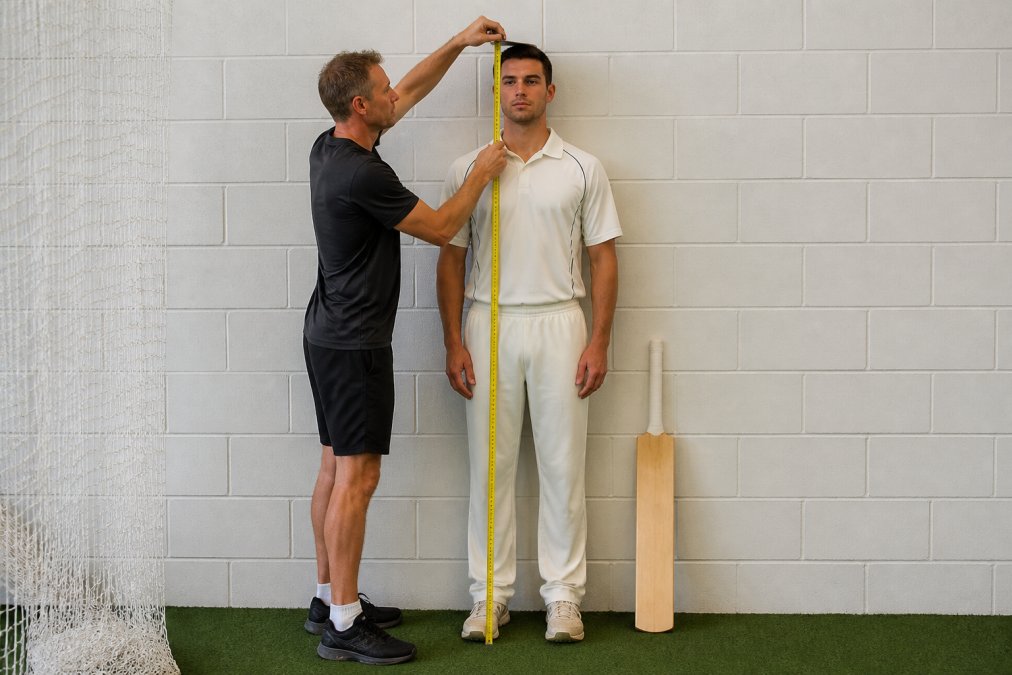
Work through these in order:
- Height. Stand in socks, back to the wall, and mark the top of your head. This sets your bat length: under 150 cm takes a size 5 or 6, 150-165 cm takes a Harrow, 165-175 cm takes a size 6 to full size short handle, and above 175 cm takes a full size long handle.
- Bat length check. Hold a bat you currently use with the toe on the ground. The handle should sit around hip height, not above your waist.
- Weight preference. Weigh your current bat. Most club players sit between 1.1 kg and 1.25 kg (Watto likes big bats and he cannot lie). If you want more bat speed, go lighter, not heavier.
- Pick-up test. Hold the bat out in front with one hand at the top of the handle. If the toe dips hard, the balance is too low for you.
- Grip size. Wrap your top hand around the handle. Your fingertips should just touch your palm, no more.
- Stance and trigger. Tell your bat maker whether you bat with a high backlift, a low trigger, or a closed stance. This changes where the spine should sit.
Send those six numbers to a maker and they can shape a bat without you ever walking into a shop.
Comparing Handcrafted Cricket Bats: Prices and Features
Handcrafted bats sit in a narrower price band than most people expect. The table below covers SGM's current range, which runs from $599 to $799 depending on grade and finish.
Bat |
Price |
Willow |
Best For |
Key Feature |
|---|---|---|---|---|
Performance Grade English Willow |
$599 |
Grade 2 |
Club players wanting ping over looks |
Selected on performance, not grain count |
Players Grade English Willow |
$699 |
Players Grade |
Stroke players and touch batters |
Lighter mass for natural bat speed |
Custom Made Cricket Bat |
$699 |
Your choice |
Anyone wanting a bespoke profile |
Configurator for willow, size and weight |
$799 |
Grade 1+, 6 to 12 straight grains |
Serious and representative players |
Premium grain selection, top-tier finish |
The Performance Grade is the honest pick for most club cricketers. It is built on a simple rule: grain count and blemishes do not determine how a bat plays, ping does. If you want the bat shaped to your exact numbers, the Custom Made option starts at the same $699 and takes about three weeks from the day you choose your willow.

The Craft Behind a Handcrafted Bat: From Cleft to Crease
The craft runs from cleft selection through pressing, handle fitting, shaping to profile and final hand finishing. Each stage is done by hand because each cleft behaves differently, and a machine cannot feel that.
It starts with the cleft. Willow is split rather than sawn, so the fibres run true down the blade. A sawn cleft cuts across fibres and creates weak points, while splitting preserves the natural grain and gives the bat its rebound. The bat is then pressed in stages. Too much pressing deadens the willow, and too little means it will not survive a hard ball, so an experienced maker reads the wood and adjusts the pressure cleft by cleft.
The handle is then fitted, glued and shaped, and this is where balance is decided. A slightly heavier handle can shift the pick-up entirely, which is why two bats of identical weight can feel completely different in your hands. Finally, the bat is shaped to profile, sanded and finished by hand. We manage this entire process in our own Melbourne factory, which is how a custom profile can be built to a specific player's specifications rather than pulled from a rack.
How to Knock In a Cricket Bat: Protect Your Investment
Knocking in a cricket bat is the process of compressing the willow fibres so the face and edges can absorb a cricket ball without cracking. A handcrafted bat still needs it, and skipping it is the fastest way to void your investment.
The routine takes six to eight hours spread over a couple of weeks:
- Hours 1-2: Use a bat mallet on the face, working from the middle outwards in small circles. Avoid the edges for now.
- Hours 3-4: Move to the edges with the mallet, angling the strikes so you round the corner of the face rather than hitting it square.
- Hours 5-6: Light throw-downs with an old ball at half pace. Watch for seam marks.
- Hours 7-8: Full-pace throw-downs, still with an old ball.
- Match day: New ball only once the face shows an even, slightly dulled surface with no visible seam dents.
Toe and splice need the least work. Over-mallet the toe and you will soften it, which is where most bats crack first.
Looking After Your Bat Through the Season
Once your bat is knocked in, season care comes down to three habits: light oiling, protecting it from moisture and heat, and fitting a toe guard and anti-scuff sheet. Apply a thin coat of raw linseed oil to the face, edges and toe once or twice before the season starts, and wipe off any excess after it soaks in. Keep the bat out of extreme heat and damp, and never leave it in a hot car or a wet kit bag. For more on keeping a bat lively, see our guide to how to maintain bat ping.
Where to Buy Handcrafted Cricket Bats in Australia
Buying handcrafted means buying from the maker, not from a rack. That matters because a bat shaped to your measurements cannot be pulled off a shelf, and the person who shaped it is the person who can adjust it later.
SGM Cricket Bats runs its own factory, which means we control every step from cleft selection to final inspection and can offer bat repair and re-handling as part of the same service. If a bat loses its ping, it can be re-handled or re-pressed rather than replaced.
The custom process works like this:
- Choose your willow grade on the Custom Made Bats page.
- Enter your height, weight preference, grip size and stance details in the configurator.
- Confirm the spec with our team if you want a second opinion.
- Your bat is shaped in Melbourne and ready in about three weeks.
If you would rather not guess at specifications, our Cricket Bat Buying Guide walks through grade, weight and profile selection in plain terms. For sizing questions, the MCC Laws of Cricket confirm bat dimensions, and Cricket Australia's junior participation guidance is a useful reference for parents buying for a junior player.
Conclusion: Your Next Bat Awaits
The hardest part of buying a handcrafted bat is committing to a specification when you have never held the finished product. That uncertainty is exactly what a proper measuring process removes, and it is why we walk every customer through height, weight, grip and stance before a cleft is selected.
SGM Cricket Bats shapes every bat in our own Melbourne factory, offers a configurator for full custom builds, and backs the range with repair and re-handling so a bat can be tuned as your game changes.
Frequently Asked Questions
What are the benefits of buying a handcrafted cricket bat?
Handcrafted bats offer superior balance, power and a personalised feel that mass-produced models can't match. Each bat is shaped from selected English willow, so the grain, weight and profile suit your style. You get better ping, a larger sweet spot and a bat that lasts longer because it's made with care, not rushed off a production line.
How do I know which weight of cricket bat is right for me?
Weight depends on your strength, technique and playing level. Most adult club cricketers use bats between 1.1kg and 1.3kg. Lighter bats (under 1.2kg) suit stroke players who rely on timing, while heavier bats (1.25kg+) give power hitters more momentum. If you're unsure, try a few in person or ask for advice when ordering a custom bat.
What is the difference between Grade 1 and Grade 2 English willow?
Grade 1 English willow has straight, evenly spaced grains (typically 8-12) with minimal blemishes. Grade 2 has slightly wider or fewer grains and may have minor specks. The grade affects looks and price more than ping.
How long does it take to make a custom handcrafted cricket bat?
Custom bats typically take around 3 weeks from the day you choose your willow. That includes selecting the cleft, shaping, pressing, fitting the handle and final finishing. If you have a tournament coming up, order early. Some makers offer express options, but a proper handcrafted bat can't be rushed without risking quality.
What is the difference between English willow and Kashmir willow?
English willow has longer, straighter fibres that rebound cleanly off the ball, giving more ping and a lighter bat for the same profile. Kashmir willow is denser and heavier, so it is cheaper but absorbs more of the ball's energy. For hard-ball club and representative cricket, English willow is the better choice.


