

Table of Contents
- What Determines Bat Ping and Why It Fades
- Signs of a Dead Cricket Bat: How to Spot Them Early
- How to Knock in a Cricket Bat to Build and Maintain Ping
- Cricket Bat Oiling Guide: Protecting the Willow
- Daily and Seasonal Habits to Maintain Bat Ping
- When to Repair or Replace Your Bat to Maintain Bat Ping
- Frequently Asked Questions
Last Updated: September 5, 2026
Bat ping is the explosive rebound a cricket bat delivers when the middle of the blade meets the ball, and maintaining it requires consistent, knowledgeable care. A bat that loses its ping feels dead in the hands, turning clean drives into soft dismissals. At SGM Cricket Bats, we handcraft bats from expertly selected English willow, and we know that how you care for that willow determines how long it performs at its peak. Below, we will show you exactly how to maintain bat ping so your bat sounds and feels as good in February as it did on day one.

What Determines Bat Ping and Why It Fades
Bat ping comes down to the compression of the willow fibres and the moisture content held within the wood. When a ball strikes the middle, the fibres compress and spring back, transferring energy into the shot. A well-prepared bat has fibres that have been gradually compressed through knocking in, creating that responsive, springy middle.

Ping fades for three main reasons. First, moisture leaves the willow over time, making the wood brittle and less responsive. Second, repeated impacts eventually crush the fibres beyond their natural recovery point. Third, surface damage such as cracking or splitting lets moisture escape rapidly and compromises the structural integrity of the blade.
The key insight is that ping is not a fixed property. It is a condition you manage. A bat that receives regular oiling and careful use will retain its responsiveness far longer than one left in the boot of a car all summer. Understanding this changes how you approach every stage of bat care.
Signs of a Dead Cricket Bat: How to Spot Them Early
A dead cricket bat announces itself through sound, feel, and visible wear. The most obvious sign is a dull, flat thud instead of a crisp crack when you strike the ball, which indicates the willow has lost its compression.
You should also watch for these warning signs:
- Hairline cracks running along the grain or across the toe
- A soft, spongy middle that leaves no mark after impact
- A bat that feels heavier than usual because the wood has absorbed moisture
- Deep indentations or "pitting" on the face where the ball strikes
- A toe that has become frayed or started to split from ground contact
Catching these signs early matters. A small surface crack can often be repaired with specialist glue and careful pressing, but a split that runs deep into the blade usually signals the end of the bat's useful life. Many players ignore the early signs and keep playing, which turns a fixable issue into a terminal one.
How to Knock in a Cricket Bat to Build and Maintain Ping
Knocking in is the process of gradually compressing the willow fibres so the bat can withstand match-speed impacts without cracking. This is the single most important step in how to knock in a cricket bat correctly, and it directly supports how to maintain bat ping over the long term.
Start with a wooden mallet or an old ball in a sock. Work through these stages:
- Begin with light taps across the entire face, edges, and toe for 15 to 20 minutes
- Increase the force gradually over several sessions, never hitting at full power
- Focus extra attention on the edges, which are most vulnerable to cracking
- Test the middle with a soft ball at about 50% intensity
- Monitor for any signs of cracking or uneven compression as you progress
The full process typically takes 4 to 6 hours spread across multiple days (ecb.co.uk). Rushing it is the most common mistake. A bat that is under-knocked will feel lively in the nets but can crack on its first real match impact, because the fibres were never prepared for that level of force.
Cricket Bat Oiling Guide: Protecting the Willow
Raw linseed oil is the standard treatment for preserving the moisture content of cricket bat willow (peer-reviewed research). A proper cricket bat oiling guide starts with understanding that the goal is to keep the wood supple, not to soak it.
Apply a thin, even coat of raw linseed oil to the face, edges, and toe of the bat. Use a soft cloth and rub the oil in gently rather than pouring it on. Allow the oil to absorb for 24 hours, then wipe off any excess. Two or three light coats are far better than one heavy application.
Oiling frequency depends on usage and climate. A bat used regularly during the season may need oiling every 4 to 6 weeks (puma.com). A bat in storage over winter needs a fresh coat before being put away, then another light coat when you bring it out for the new season. In drier conditions, the willow will need oil more frequently to replace lost moisture.
Daily and Seasonal Habits to Maintain Bat Ping
Consistent habits make the difference between a bat that lasts one season and one that performs for several. The daily routine is simple: wipe the bat down after every innings to remove moisture and dirt, and store it in a cool, dry place away from direct heat.
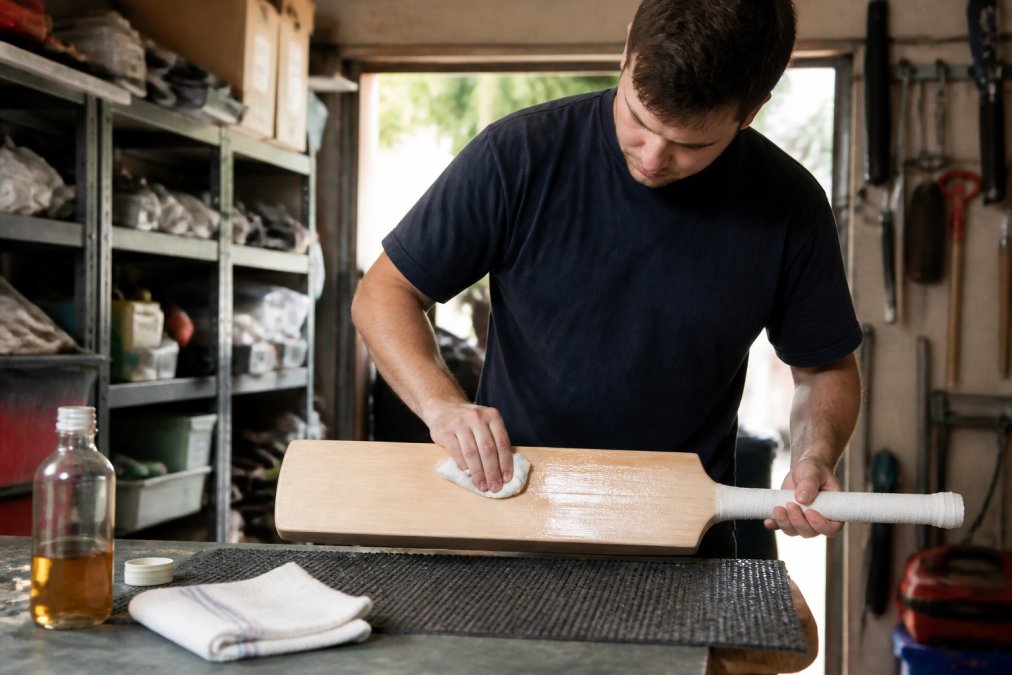
Seasonal care follows a clear rhythm. During the playing season, keep the bat lightly oiled and inspect it weekly for cracks or damage. At the end of the season, give the bat a thorough clean, apply a fresh coat of oil, and store it flat in a cool room.
Many players overlook the importance of how the bat is transported. Leaving a bat in a hot car damages the willow, accelerating moisture loss and making the wood brittle. A quality bat cover with padding offers basic protection, but avoiding extreme temperatures matters more than any cover.
When to Repair or Replace Your Bat to Maintain Bat Ping
Knowing when to repair and when to replace is a judgement call that extends the life of your bat and protects your performance. Minor surface cracks can be repaired with specialist superglue, and a worn toe can be rebuilt with a toe guard or by a professional bat repair service.
A bat that has lost its ping through fibre fatigue, however, cannot be restored by oiling or knocking. Once the willow has been compressed beyond its recovery point, the middle will feel permanently soft. At this stage, continuing to use the bat compromises your scoring power and risks a catastrophic split mid-innings.
The table below summarises common issues and the right response:
| Problem | Likely Cause | Best Action |
|---|---|---|
| Surface crack along the grain | Dryness or edge impact | Repair with specialist glue |
| Soft, dead middle | Fibre fatigue from heavy use | Replace the bat |
| Frayed or split toe | Ground contact | Fit a toe guard or professional repair |
| Cracks after minimal use | Under-knocked willow | Professional pressing and repair |
If your bat has served you well for several seasons and the ping has gone, the honest answer is that it is time for a new one. A fresh, properly prepared bat will give you back the explosive response you remember. SGM Cricket Bats offers a range of handcrafted English willow bats built with performance as the priority, with every cleft selected for its ping potential.
Caring for a cricket bat is not complicated, but it does require consistency and a willingness to learn the signs of wear. The routines we have covered, regular oiling, proper knocking in, daily cleaning, and honest assessment of damage, will keep your willow responsive for as long as the fibres can physically deliver. When the time does come to retire a bat, a handcrafted replacement from SGM Cricket Bats gives you expert guidance on selection and a bat built to your preferred profile. Shop now and feel the difference a properly prepared bat makes.

Frequently Asked Questions
How often should I oil my cricket bat to keep its ping?
For a new bat, apply raw linseed oil before knocking in. After that, oil once before the season starts and once mid-season if you play regularly. A thin, even coat is all you need. Let the oil absorb for 24 hours before using the bat again.
Can knocking in a bat really improve its ping?
Yes. Knocking in compresses the fibres on the face and edges of the willow. This hardens the surface so the ball rebounds faster, which is what creates a good ping. Without proper knocking in, the bat is more likely to crack and will not perform as well. Use a wooden mallet or a ball in an old sock, working through the middle and edges gradually.
How can I tell if my cricket bat has lost its ping?
A dead bat feels dull when you strike the ball. You will notice the ball does not travel as fast or as far, and the sound changes from a crisp crack to a flat thud. Inspect the blade for deep cracks, a soft or spongy face, or significant moisture damage. These are clear signs of a dead cricket bat that needs professional repair or replacement.
Should I use a bat cover to maintain my bat's performance?
Absolutely. A bat cover protects the willow from dust and, more importantly, from rapid moisture changes. Store your bat in a cool, dry place, and never leave it in a car boot on a hot day. Using a cover can help protect the bat, but keep the bat itself dry to avoid the willow becoming heavy and losing its ping.
This article was written using GrandRanker


