

Table of Contents
- Why the Right Cricket Protective Gear Matters
- 1. Cricket Helmet with Face Guard
- 2. Cricket Batting Pads
- 3. Batting Gloves
- 4. Thigh Guards and Abdominal Protectors
- 5. Wicket-Keeping Gloves and Pads
- 6. Arm Guards and Chest Guards
- How to Choose Cricket Protective Gear That Fits Properly
- Frequently Asked Questions
Last Updated: October 19, 2026
Why the Right Cricket Protective Gear Matters
Walk into any club nets session and you will see the same thing: batters wearing whatever gear they bought as juniors, long after it stopped fitting properly. Cricket protective gear is the equipment designed to absorb or deflect ball impact before it reaches the body, and getting it wrong has real consequences. A ball leaving a club quick at 120 km/h carries enough force to break a finger, crack a rib or worse, and the padding that saved you at 15 will not do the job at 35.
At SGM Cricket Bats, we build bats for a living, and we also offer a range of high-quality cricket gear. Below, we break down the 10 essential cricket protective gear items every serious player needs, what each one protects, and the features that separate a good item from a dangerous one.
1. Cricket Helmet with Face Guard
A cricket helmet with face guard is the only piece of gear that protects against fatal injury, which is why it comes first on this list. The helmet shell and liner absorb the blow from a bouncer, while the fixed grille stops the ball reaching your face, teeth and jaw. A ball that misses the bat can arrive at your head with no time to react, and no amount of skill replaces head protection.
Look for a grille that sits close to the peak with gaps too small for a ball to pass through, a secure back strap, and a liner that fits snugly without pressure points. Neck guards that attach to the rear of the helmet are worth adding, particularly at higher grades where short-pitched bowling is common. Check the fit with the strap done up: the helmet should not shift when you shake your head.
2. Cricket Batting Pads
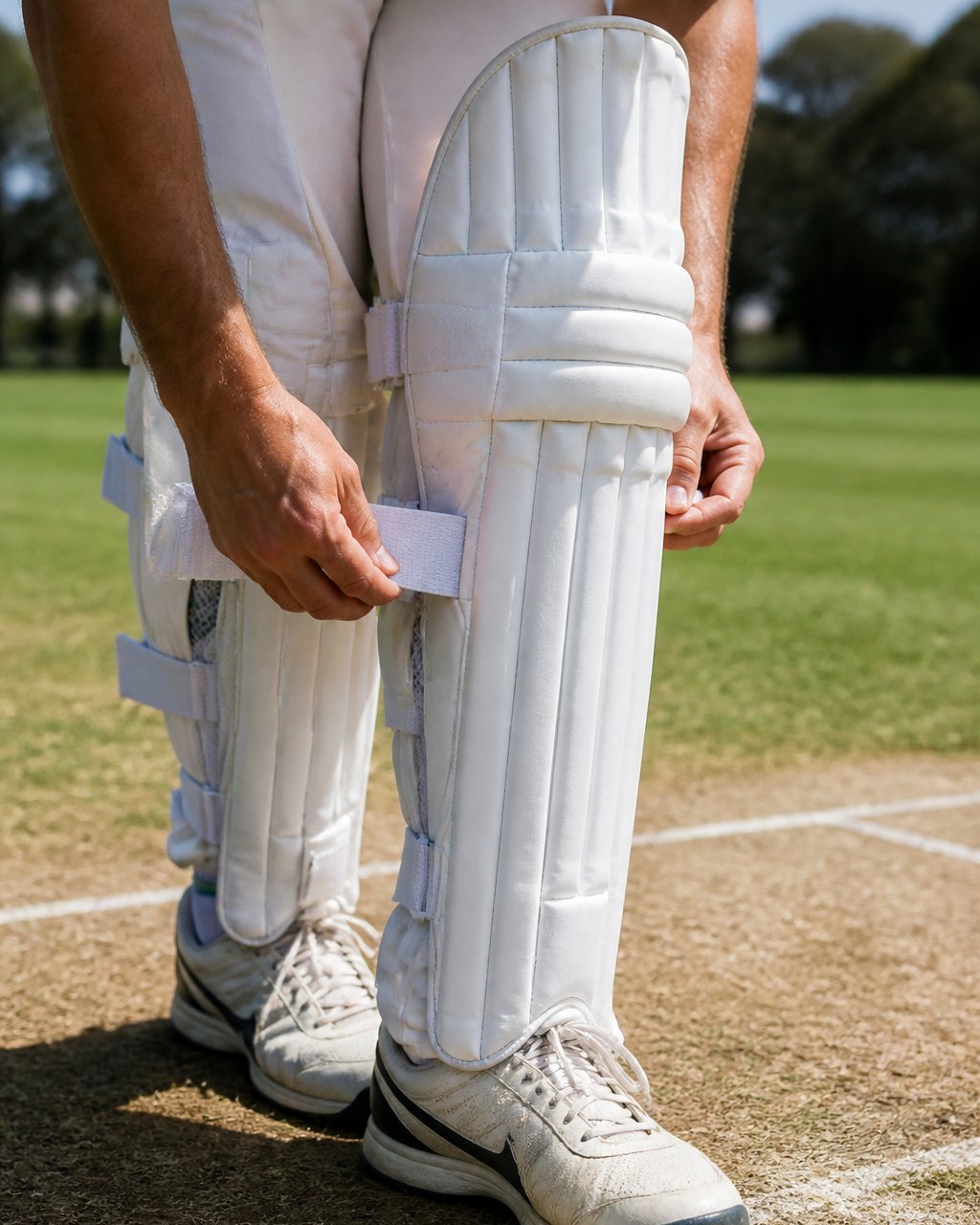
Batting pads protect the shins, knees and calves from deliveries that beat the bat or deflect off the pitch. More importantly, they let you bat with confidence: a batter worried about a cracked shin plays tentatively, and tentative batting gets you out. Pads should cover from the top of the foot to just below the knee, with a knee roll that allows a full crouch.
SGM's player-grade cricket batting pads are built with a super soft, super light construction and sweat-absorbent lining, priced at $120.00. Sizing runs from Small Boys up to Large Men, measured from the centre of the knee to the top of the foot. Straps matter as much as padding: three straps should hold the pad firmly without cutting off circulation.

3. Batting Gloves
Batting gloves take the sting out of fast bowling and protect the small bones of the hand, which break easily and heal slowly. Sausage finger construction, the traditional design with individually padded fingers, spreads impact across every joint rather than concentrating it on one. Look for reinforced finger protection, a soft inner lining and ventilated panels for long innings.
SGM's Elite Sausage Finger batting gloves use premium leather and advanced synthetics with an adjustable wrist strap, available in right and left hand at $120.00. The fit test is simple: make a fist. The glove should feel snug across the palm with no loose fabric at the fingertips, and the wrist strap should hold firm without restricting your grip on the bat.

4. Thigh Guards and Abdominal Protectors
Thigh guards and abdominal protectors cover the areas pads and gloves miss: the upper thigh, the hip and the groin. A ball that climbs off a length can strike the thigh or box with enough force to end your innings, and no batter should face quick bowling without a box. Thigh guards clip to a waistband or strap around the leg, and good ones stay in place when you run.
SGM's thigh guards weigh very little while keeping impact resistance, with long-lasting Velcro straps around the waist and thighs, priced at $80.00. When choosing, check that the guard covers the leading thigh in your stance and that the straps do not slip when you rotate into a shot. The abdominal protector should sit flat against the body and stay put through a full swing.

5. Wicket-Keeping Gloves and Pads
Wicket-keeping gloves and pads are built differently from batting gear because keepers face the ball at close range for an entire innings. Keeping gloves have webbing between the thumb and index finger, reinforced palms and padded cuffs to absorb catches off the edge. Keeping pads are shorter and lighter than batting pads, with extra protection on the instep where the ball skids through.
Cricket Thigh Guards | Buy Melbourne →
Fit is everything for keepers. Gloves should feel tight enough that you can pick up a ball cleanly, with no excess leather at the fingertips. Check the webbing flexes freely and the palm padding sits where the ball actually lands. Pads should let you squat deep with the knee roll clear of the ground and the instep guard covering the top of the foot.
6. Arm Guards and Chest Guards
Arm guards and chest guards have become standard for batters facing pace. Arm guards strap to the leading forearm and protect against balls that climb and hit the arm, a common injury when you take your eyes off a bouncer. Chest guards sit under the shirt and shield the sternum and ribs from balls that rear up off a length.
Look for a low-profile arm guard that does not restrict your swing and a chest guard that stays flat against the body. Cheap versions bunch up under the shirt, which is worse than wearing nothing. If you face medium pace or above, both items belong in your kit bag.
How to Choose Cricket Protective Gear That Fits Properly
Choosing cricket protective gear comes down to three checks: coverage, fit and freedom of movement. Gear that covers the right areas but shifts when you move is not protecting you, and gear so tight it restricts your swing is a liability. Measure before you buy, try everything on with the rest of your kit, and replace anything that has taken a heavy impact.
Check |
What to Look For |
Why It Matters |
|---|---|---|
Coverage |
No gaps at joints, face, groin or instep |
Impact injuries happen where padding ends |
Fit |
Snug, no shifting when you move |
Loose gear slides away from the impact zone |
Movement |
Full swing, crouch and run without restriction |
Restricted movement causes hesitation |
Condition |
No cracked liners, worn straps or split padding |
Damaged gear fails when it counts |
Sizing |
Measured against the manufacturer's chart |
Wrong sizes protect the wrong areas |
Work through the checklist with every item before the season starts. If you are kitting out from scratch, our custom-made bats and full range of cricket gear are built to match the same standard we apply to our bats. For a complete season checklist, see our Complete Cricket Gear Guide for Club Cricketers.
Frequently Asked Questions
What protective gear do you need to play cricket?
A batter needs a helmet with a face guard, batting pads, batting gloves, thigh guards, and an abdominal protector as a minimum. Wicket-keepers require their own specialised gloves and pads, plus a helmet and shin protection. Fielders close to the bat often wear a helmet and shin guards. The exact kit depends on your role, but every player should start with properly fitted cricket protective gear before stepping onto the field.
What is the difference between batting pads and wicket-keeping pads?
Batting pads are lighter and shaped for running between wickets, with flexible knee rolls and straps that allow movement. Wicket-keeping pads are shorter, lighter still, and designed for squatting and lateral movement behind the stumps. They prioritise agility over the heavy ball-impact protection a batter needs. Using batting pads for keeping restricts movement, while keeping pads leave a batter exposed to fast deliveries, so match the pad to the role.
How should cricket protective gear fit?
Helmets should sit snug with the grille close to the face and no gap at the back. Batting pads should cover from just above the knee to the top of the foot, with straps tight enough to stay put but loose enough for circulation. Gloves should feel secure without restricting finger movement. Thigh guards should wrap firmly and stay in place when you run. Always measure and check the manufacturer's size guide before ordering.
When should you replace cricket protective gear?
Replace a helmet after any significant impact to the shell, and check the grille for bends or cracks each season. Batting pads and gloves should be replaced when the padding compresses, the straps lose grip, or the outer facing tears. Thigh guards with stretched Velcro no longer stay in place and should be retired. Inspect your cricket protective gear before every season and replace anything that has lost its protective integrity.
Protection is the part of your kit you hope never to test, which is exactly why it deserves the same attention as your bat. At SGM Cricket Bats, we handcraft English willow bats and supply professional-grade gear including batting pads, gloves and thigh guards, all built to hold up to club and representative cricket. Shop now to complete your kit, or talk to us about a custom bat built to your game.


