

Table of Contents
- Why Lightweight Cricket Batting Gloves Matter in Summer
- What to Look for in Lightweight Cricket Batting Gloves
- Cricket Batting Glove Sizing Guide: Getting the Fit Right
- Breathable Cricket Batting Gloves: How They Keep Hands Cool
- How to Care for Cricket Batting Gloves After a Hot Match
- Protection vs Weight: Finding the Right Balance
- Common Mistakes When Buying Summer Batting Gloves
- Conclusion
- Frequently Asked Questions
Last Updated: October 17, 2026
Why Lightweight Cricket Batting Gloves Matter in Summer
Summer cricket in Australia is a test of endurance as much as skill. Long days in the field, relentless heat, and the physical toll of batting for hours all compound quickly. A pair of lightweight cricket batting gloves is one of the simplest upgrades a batter can make to stay comfortable and in control at the crease.

The logic is straightforward. Heavy, poorly ventilated gloves trap heat and moisture, which softens your grip and dulls your feel for the bat handle. Lighter gloves with breathable panels let air circulate, keeping your hands drier and your grip more secure through a long innings. At SGM Cricket Bats, we build gear for players who take their time at the crease seriously.
Below, we break down exactly what separates a good summer glove from a bad one, how to size them correctly, and the mistakes that cost club cricketers the most.
What to Look for in Lightweight Cricket Batting Gloves
The best lightweight cricket batting gloves balance three things: ventilation, protection, and grip. Get all three right and you have a glove that performs through a full day's play.
Start with the materials. Premium leather palms offer the best feel on the bat handle, while synthetic mesh panels on the back of the hand allow heat to escape. Look for ventilated finger sections, not just a token mesh strip on the wrist.
Then consider the finger construction. Sausage finger designs, where each finger is individually padded, offer strong protection without excessive bulk. This classic build has stood the test of time for good reason: it distributes impact across separate chambers rather than one solid block.
Finally, check the wrist closure. An adjustable strap should feel secure without restricting movement. A loose wrist strap lets the glove shift during play, which ruins your grip and increases the risk of blisters.
Cricket Batting Glove Sizing Guide: Getting the Fit Right
A cricket batting glove sizing guide starts with one rule: measure your dominant hand from the base of your palm to the tip of your middle finger. Match that measurement to the manufacturer's size chart, and always size up if you're between sizes.
Fit matters more than most players realise. A glove that's too tight restricts finger movement and reduces circulation, which makes your hands feel colder in winter and hotter in summer. Too loose, and the glove rotates on the handle, causing blisters and a loss of control.
Here's a quick checklist for a correct fit:
- Fingers should reach the end of the glove without pressing against the tip
- The palm should sit flat against the handle with no bunching
- The wrist strap should close snugly with room to tighten further
- You should be able to make a full fist without the glove pulling tight across the knuckles
If you're ordering online, measure both hands. Most players have a slightly larger dominant hand, and the glove should fit the larger one comfortably.
Breathable Cricket Batting Gloves: How They Keep Hands Cool
Breathable cricket batting gloves work by moving moisture away from the skin and allowing air to flow across the back of the hand. The key components are mesh panels, ventilated fingers, and moisture-wicking inner linings.
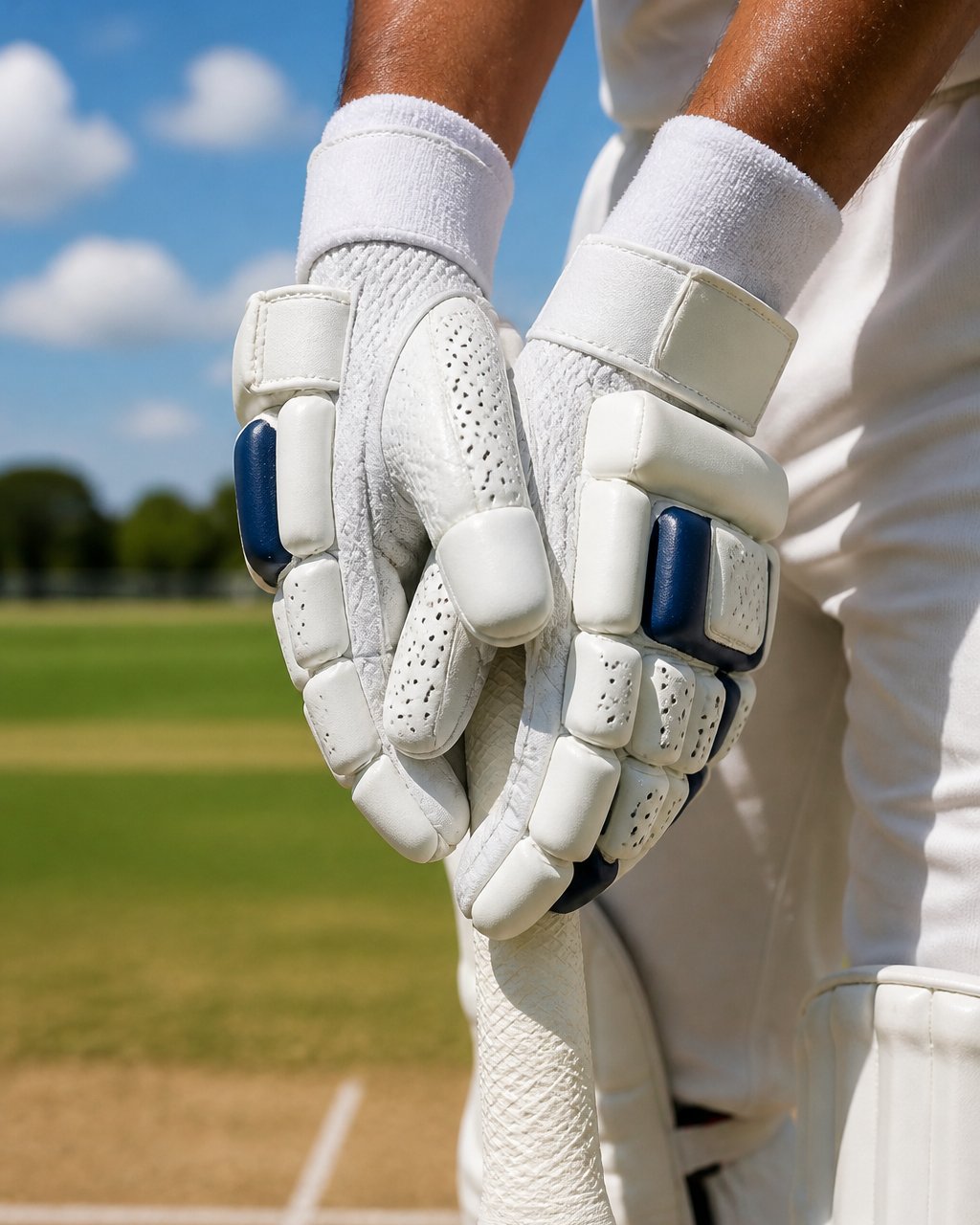
The science is simple. When your hands sweat inside a non-breathable glove, the moisture softens the leather palm and reduces friction against the handle. That means less control and a higher chance of the bat turning in your hands mid-shot. Breathable panels let that moisture escape before it becomes a problem.
Look for gloves with ventilated panels across the fingers and back of the hand, not just at the wrist. The airflow needs to reach the areas that generate the most heat.
How to Care for Cricket Batting Gloves After a Hot Match
Knowing how to care for cricket batting gloves properly extends their life and keeps them performing through the season. The routine is simple but most players skip it.
After play, wipe the palms with a damp cloth to remove sweat and dirt. Never soak leather palms in water, as this breaks down the material. Let the gloves air dry naturally, away from direct sunlight and never on a heater or radiator, which cracks the leather.
Cricket Batting Gloves | Elite Sausage Fingers | Buy Melbourne →
Once dry, apply a small amount of leather conditioner to the palms to keep them supple. Store the gloves flat in your kit bag rather than crumpled, and avoid leaving them in a hot car between matches. Heat degrades the synthetic panels and dries out the leather faster than anything else.
Check the stitching and padding every few weeks. Loose stitching caught early is a quick repair; left alone, it becomes a glove replacement.
Protection vs Weight: Finding the Right Balance
The trade-off between protection and weight is real, and it's where most buying decisions go wrong. Heavier gloves offer more padding, but they reduce feel and trap heat. Lighter gloves improve comfort and control, but you need to be confident the protection is adequate for the level you play.
For club and recreational cricket, a well-made lightweight glove with sausage finger construction offers plenty of protection against fast deliveries. The individually padded fingers absorb impact across separate zones, which is more effective than a single thick pad.
Our Elite Sausage Fingers batting gloves are built around this principle. They use premium leather and advanced synthetics for durability, with reinforced finger protection and ventilated panels to keep hands cool through long innings. At $120.00, they're a dependable option for players who want protection without excess weight.
If you face genuinely quick bowling, don't compromise on finger protection. The weight saving isn't worth a broken finger.
Common Mistakes When Buying Summer Batting Gloves
The biggest mistake is buying on price alone. Cheap gloves use thin padding and poor stitching, and they fail within a season. A common approach among club players is to spend a little more upfront and replace gloves far less often.
Another frequent error is ignoring ventilation in favour of extra padding. In summer, a heavily padded glove with no airflow becomes a sweat trap by the second hour. Prioritise breathable panels if you bat long innings.
Players also tend to buy the wrong size because they don't measure their hands. Ordering based on "feel" through a plastic bag or guessing from a previous pair leads to blisters and poor grip.
Conclusion
Getting your hands right for summer cricket comes down to three things: choosing lightweight cricket batting gloves with genuine ventilation, sizing them correctly, and looking after them after every match. Do those three things and your grip stays secure, your hands stay cooler, and your concentration holds through the longest innings.
If you're upgrading your kit this season, our handcrafted cricket gear is built for players who take their equipment seriously. Every pair is made with the same attention we give our custom bats.
Frequently Asked Questions
What are the best lightweight cricket batting gloves for summer?
The best lightweight cricket batting gloves for summer combine breathable materials, ventilated panels and reliable protection. Look for gloves with mesh or perforated sections, moisture-wicking linings and a secure wrist strap. SGM Cricket Bats offers the Elite Sausage Fingers batting gloves at $120, built with ventilated panels to keep hands cool and reinforced finger protection for fast deliveries. Prioritise fit and airflow over extra padding, and always check sizing before you buy.
Are lightweight batting gloves suitable for hard-ball cricket?
Yes, provided they are designed for hard-ball use. Lightweight cricket batting gloves for summer should still include reinforced finger protection and quality leather or synthetic palms. The key is balance: lighter materials reduce heat buildup, but the glove must absorb impact from a hard ball. Check that the glove lists hard-ball suitability and has protection across all impact zones, especially the fingers and thumb.
How do I care for cricket batting gloves after a hot, sweaty match?
Air-dry your gloves immediately after play, away from direct sunlight and heat sources. Wipe leather palms with a damp cloth and mild soap, then let them dry naturally. Avoid washing machines and tumble dryers, which damage leather and padding. Stuff gloves with newspaper to absorb moisture and maintain shape. Rotate between two pairs in summer so each fully dries, and store them in a ventilated bag rather than a sealed kit bag.
How should cricket batting gloves fit?
Gloves should feel snug but not restrictive. Your fingers should reach the end of the finger stalls without pressing against the tips, and the wrist strap should fasten securely without cutting off circulation. Make a fist: the glove should flex naturally with no bunching in the palm. If you are between sizes, size up for summer to allow airflow and reduce sweat buildup.
Summer cricket rewards players who prepare properly. If your gloves are letting you down, it's time to upgrade. At SGM Cricket Bats, we handcraft professional-grade equipment with premium leather, ventilated panels, and reinforced finger protection built for long innings in the heat. Shop our batting gloves range today and give your hands the comfort and control they deserve.


