

Table of Contents
- Why Bat Speed Beats Brute Force Against Fast Bowling
- Fixing Your Setup and Grip Before You Chase Speed
- Cricket Bat Speed Exercises You Can Do Off the Field
- Bat Speed Drills for Cricket: Throwing, Shadow and Underload Work
- How to Improve Reaction Time in Cricket Batting
- Light Bat Versus Heavy Bat for Batting
- Mistakes That Kill Bat Speed Under Pressure
- Conclusion: Building a Faster Bat Through the Zone
- Frequently Asked Questions
Last Updated: 6 October 2026
Why Bat Speed Beats Brute Force Against Fast Bowling
Fast bowling punishes slow hands. The ball arrives quicker than most club players expect, and muscling it rarely works. Learning how to increase bat speed against fast bowling comes down to technique, timing and the right equipment, not gym strength.
At SGM Cricket Bats, we handcraft English willow bats in Melbourne.

Bat speed is the rate at which the bat travels through the hitting zone. It matters more than raw power because quick hands let you play late, adjust to movement and still find the middle.
A common mistake is buying the heaviest bat you can lift. That slows your hands and shortens your backlift under pressure.
Below, we break down the setup fixes, drills and training habits that genuinely add speed through the zone.
Fixing Your Setup and Grip Before You Chase Speed
Most bat speed problems start before the bowler runs in. Your grip and setup decide how freely the bat swings, so fix those first.
Grip Pressure and the Top Hand
Hold the handle lightly. A tense grip locks your wrists and kills the whip through the ball.
The top hand guides the bat; the bottom hand adds power late. If your bottom hand dominates early, the bat pushes rather than swings.
Try this: grip as if holding a small bird. Firm enough not to drop it, loose enough to let it breathe.
Backlift, Stance and Trigger Movement
Your backlift should be short and straight toward the stumps. A big loop wastes time against pace.
Keep your stance balanced with weight slightly forward. A small trigger, a gentle press or lift, gets you moving without overcommitting.
Three quick setup checks:
- Grip pressure light, not white-knuckled
- Backlift short and toward the stumps
- Trigger small and repeatable
Cricket Bat Speed Exercises You Can Do Off the Field
You do not need a gym to build faster hands. Cricket bat speed exercises at home target the muscles and movement patterns that matter.
Focus on rotational core work, wrist strength and shoulder mobility. These drive the swing.
A Simple Three-Day Weekly Plan
| Day | Focus | Example Exercises |
|---|---|---|
| Day 1 | Core rotation | Medicine ball twists, plank rotations |
| Day 2 | Wrist and forearm | Wrist curls, grip squeezes, rice digs |
| Day 3 | Shoulders and speed | Band pull-aparts, light shadow swings |
Keep reps moderate and quality high. Speed work should feel sharp, not exhausting.
- Warm up for five minutes before every session
- Stop a set when your form drops
- Rest a full day between speed sessions
Bat Speed Drills for Cricket: Throwing, Shadow and Underload Work
The best bat speed drills for cricket blend throwing, shadow batting and underload training. Each teaches your body to move the bat faster without losing control.
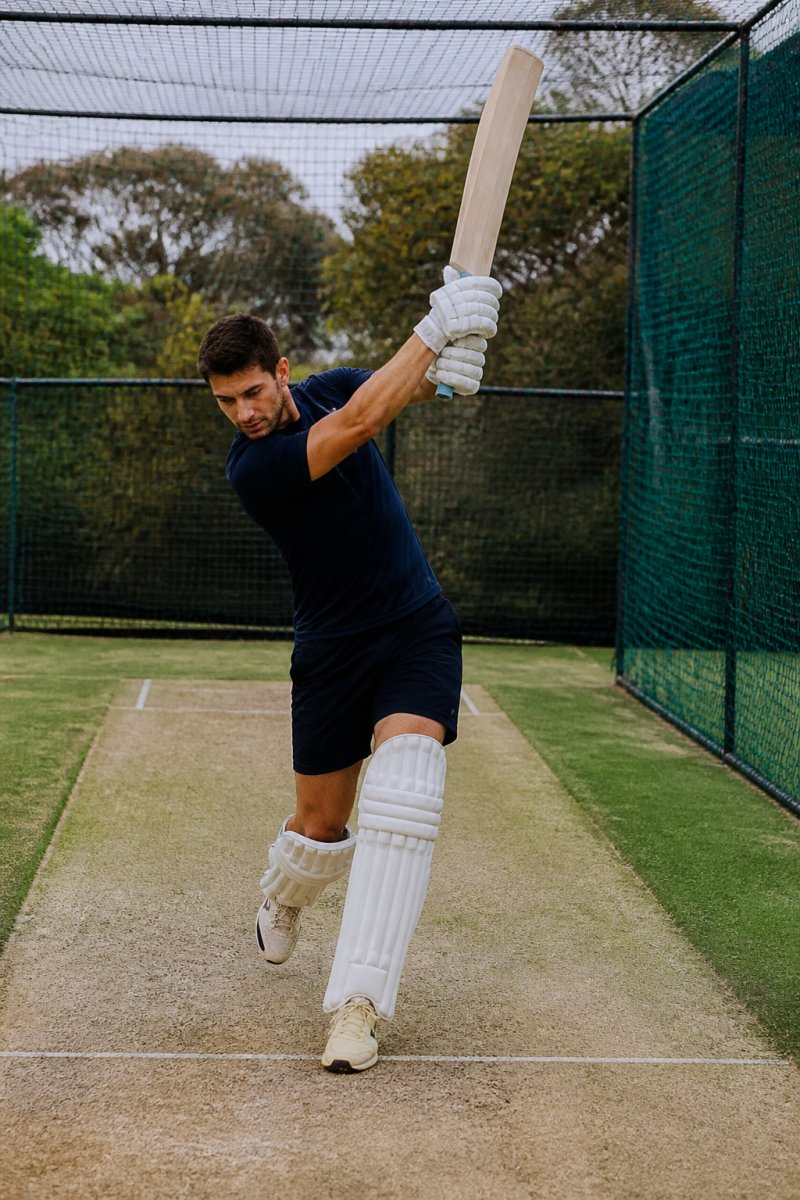
Throwing a light medicine ball mimics the batting swing. It builds the same rotational power.
Shadow batting in front of a mirror lets you groove the path without a ball. Watch your hands lead the bat.
Underload work uses a lighter bat or training tool. Your body learns to swing faster, then transfers that speed to a match bat.
A simple drill set:
- Ten medicine ball throws, each side
- Twenty shadow swings, focusing on a short backlift
- Ten swings with a lighter bat, then five with your match bat
How to Improve Reaction Time in Cricket Batting
Learning how to improve reaction time in cricket batting is really about training your eyes and your first movement. Quick hands are useless if you read the ball late.
Players Grade English Willow Cricket Bat | Buy Melbourne →
Start by watching the ball from the bowler's hand, not the pitch. Early pickup gives you more time to react.
Face throwdowns from a shorter distance to speed up your decision-making. Increase the pace gradually.
Reaction drills to try:
- Call out the length as the ball leaves the hand
- Face rapid throwdowns with a partner
- Practise switching between front and back foot on command
The goal is a calm, early first move. Panic slows you down.
Light Bat Versus Heavy Bat for Batting
The light bat versus heavy bat for batting debate has a clear answer for most players: a lighter bat gives you faster hands. Speed beats mass through the zone.
A lighter bat lets you play late and adjust to movement. A heavier bat can hit hard, but only if you get there on time.
This is where balance matters. A well-balanced bat feels lighter than its weight suggests.
Our Players Grade English Willow Cricket Bat is built for exactly this. The lighter mass unlocks natural bat speed, so your timing does the work rather than your arms. It suits stroke players, openers and anyone whose coach has said their bat is "too heavy".
| Bat Type | Best For | Trade-off |
|---|---|---|
| Light bat | Quick hands, late play, stroke makers | Less raw power on its own |
| Heavy bat | Strong front-foot hitters | Slower hands under pressure |
If you want a bat built to your exact weight and profile, our custom-made bats are handcrafted and ready to ship within 3 weeks.
Mistakes That Kill Bat Speed Under Pressure
Speed disappears the moment you tighten up. Under pressure, most batters make the same handful of errors.
The biggest is gripping harder as the bowler runs in. Tension is the enemy of fast hands.
Other common mistakes:
- Lifting the backlift higher when nervous
- Planting the front foot early and reaching for the ball
- Chasing the ball with the bottom hand
- Using a bat that is too heavy for your strength
Fix the grip first. Then trust your trigger and let the bat swing.
Conclusion: Building a Faster Bat Through the Zone
Faster hands come from a light grip, a short backlift and the right bat in your hands. Train the movement off the field, then trust it in the middle.
If your bat is holding you back, we can help. Our Players Grade English Willow Cricket Bat is built for natural bat speed, and our custom-made bats are shaped to your exact weight and profile. Every bat is handcrafted in our own factory, with free postage within Australia.
Get started with SGM Cricket Bats and feel the difference a balanced, handcrafted bat makes through the zone.
Frequently Asked Questions
How can I increase my bat speed in cricket?
Increase bat speed by training the muscles that drive the swing, not just the arms. Use a mixed weekly plan of throwing drills, shadow batting with a weighted or underload bat, and short-sprint work for the first three metres. Pair that with technique fixes: lighter grip pressure, a shorter backlift, and a trigger movement that gets you into position early. Most club players see a quicker swing within four to six weeks of consistent training, especially when they also review their bat weight and profile.
Does a lighter cricket bat help increase bat speed?
A lighter bat can help, but only if you can still hit the ball hard enough to score. Lighter mass makes it easier to accelerate through the hitting zone, which matters against fast bowling where you have less time. SGM Cricket Bats builds the Players Grade from 2.6 to 2.12 lbs for players who rely on timing and placement, and the Reserve Edition from 2.5 to 2.12 lbs for those who want more mass behind the ball. The right choice depends on your strength, your role and the pace you face.
How do I generate more power without losing bat control?
Power without control comes from sequencing, not from swinging harder. Keep the bottom hand relaxed through the swing, drive the top hand through the line of the ball, and let the hips and front shoulder lead the bat. Practise with a bat you can control at 80 per cent effort, then build up. A bat with thicker edges and a larger sweet spot, such as the Performance Grade English Willow Cricket Bat, gives you more forgiveness on off-centre hits, so you can swing fast without spraying the ball.
What drills help develop a quicker bat swing?
Three drills work well for club cricketers. First, underload shadow swings: 3 sets of 10 with a lighter bat, focusing on bat path rather than maximum effort. Second, reactive throwing against a wall or rebounder to sharpen hand speed and tracking. Third, short-pitch feed drills in the nets where a coach or partner throws from 16 to 18 metres, forcing you to play late and fast. Keep sessions to 20 to 30 minutes, three times a week.


