

Table of Contents
- Why Authentic English Willow Clefts Matter for Your Bat
- How to Tell English Willow from Kashmir Willow
- Reading English Willow Grain Patterns
- English Willow Cleft Defects to Reject on Sight
- English Willow Provenance and Traceability: Asking the Right Questions
- Your Cleft Inspection Checklist
- Conclusion: Buy With Confidence
- Frequently Asked Questions
Last Updated: October 15, 2026
Why Authentic English Willow Clefts Matter for Your Bat
A cricket bat only performs as well as the willow it was cut from. English willow clefts are the split, shaped blocks of Salix alba caerulea timber that become a finished bat once they are pressed, handled and shaped. Get the cleft right and everything downstream, the ping, the balance, the lifespan, falls into place. At SGM Cricket Bats, we select every cleft by hand before it enters our workshop, so we know exactly how much difference the raw timber makes.

The problem is that clefts are easy to fake and hard to verify once they are shaped into a bat. By the time you see a finished blade, most of the evidence has been sanded away. That is why serious players learn to read a cleft before it becomes a bat.
This guide shows you how to identify authentic English willow clefts using grain, colour, weight and provenance. We will cover what to look for, what to reject outright, and the questions to ask any supplier before you commit.
The stakes are simple: a genuine cleft from well-grown English willow plays better and lasts longer than a mislabelled substitute. Learning to tell the difference protects your money and your innings.
How to Tell English Willow from Kashmir Willow
English willow is grown in damp, cool conditions that produce a light, low-density timber with a springy, powerful ping. Kashmir willow is denser and heavier, and it rarely reaches the same performance ceiling. The two can look similar at a glance, so you need to check weight, colour and grain together rather than trusting a single clue.
English willow is a low-density, fast-recovering timber grown in cool, wet climates. Its light weight and springy fibres produce the ping that top players pay for.
Here is how the two compare in practice:
| Feature | English Willow | Kashmir Willow |
|---|---|---|
| Weight | Light for its size | Noticeably heavier |
| Colour | Pale cream to light honey | Darker, more tan |
| Grain | Fine, straight, tight | Coarser, wider |
| Ping | Sharp, springy | Duller, flatter |
| Typical use | Premium bats | Budget bats |
A common mistake is judging willow by colour alone. Some English clefts carry natural stains that look "worse" than a clean Kashmir blade, yet they play far better. Weight in the hand is the more reliable first test.
If you are coming from an off-the-shelf bat, expect the real thing to feel livelier from the first tap. That springiness is the whole point of the timber.
Reading English Willow Grain Patterns
Grain count is the most overrated measure in bat buying, and the most misunderstood. English willow grain patterns are the lines of the timber running along the face, and while straight, evenly spaced grain signals sound growth, a high count does not guarantee performance. We press and shape for ping, not for a pretty face.
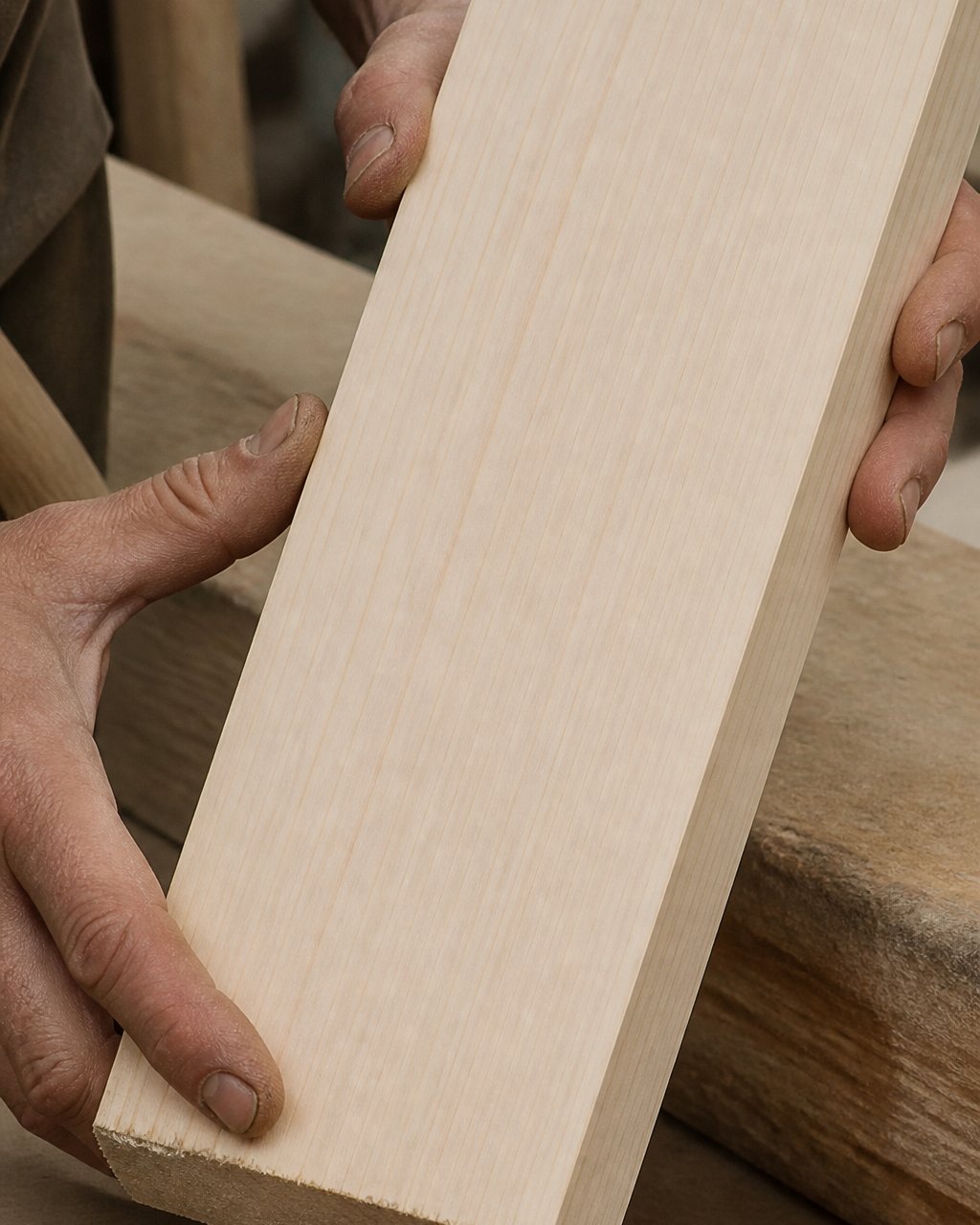
What actually matters in a grain pattern:
- Straightness: Lines should run parallel down the face, not wander or cross.
- Even spacing: Consistent gaps suggest steady growth.
- Consistency: The pattern should hold from toe to shoulder.
A cleft with fewer grains but straight, clean lines can outperform one with a high count and wavy, inconsistent grain. This is why our Performance Grade bats are chosen on ping rather than grain count alone.
English Willow Cleft Defects to Reject on Sight
Some clefts carry faults that will shorten a bat's life no matter how well it is finished. English willow cleft defects are the flaws to walk away from, and spotting them early saves you a costly mistake. Check the face, edges and toe before anything else.
Reject a cleft if you see:
- Butterfly or knot clusters on the playing face, which become weak points under impact.
- Diagonal grain that runs across the blade instead of down it.
- Sapwood streaks running deep into the face, which are softer than heartwood.
- Cracks or checks in the timber, even hairline ones.
- Blue stain or rot that signals poor drying or storage.
Minor natural stains and colour variation are fine. They do not affect how the bat plays, and we happily use clefts with cosmetic blemishes when the ping is there. The defects above are different: they predict failure.
Custom Made Cricket Bats | Buy Melbourne →
A cleft that passes this check is one worth building on. One that fails is not worth your money at any price.
English Willow Provenance and Traceability: Asking the Right Questions
Provenance is the paper trail behind a cleft: where the willow grew, how it was dried, and who handled it. English willow provenance and traceability matter because they are the only way to confirm you are buying what the seller claims. A trustworthy supplier can answer these questions without hesitation.
Ask any supplier:
- Where was the willow grown and felled?
- How long was the cleft dried and seasoned?
- Can you show me the cleft before it is shaped?
- What grade is it, and what does that grade mean to you?
- What happens if the bat does not feel right?
Vague answers are a red flag. A supplier who manages their own production, from cleft selection to final inspection, can trace every step. That is how we operate at SGM Cricket Bats: we oversee the whole process, so we can tell you exactly what is in the bat you are buying.
If you cannot see the cleft before it is shaped, ask for photos and a clear description of the grain and weight. A supplier with nothing to hide will provide them.
Your Cleft Inspection Checklist
Use this checklist every time you assess a cleft. It takes a few minutes and catches the faults that matter most.
- Weight: Light for its size, springy in the hand.
- Colour: Pale cream to light honey, not dark tan.
- Grain: Straight, evenly spaced, running toe to shoulder.
- Face: Free of knots, butterfly clusters and deep sapwood.
- Edges: Clean, with no cracks or checks.
- Toe: Solid, with no blue stain or soft spots.
- Provenance: Supplier can explain origin, drying and grading.
If a cleft passes all seven, it is worth building a bat on. If it fails two or more, move on.
For players who want the selection handled for them, our Cricket Bats range is built from clefts we have inspected ourselves. If you would rather specify every detail, our Custom Bats let you choose your willow grade, weight and profile, handcrafted and ready in three weeks.
Conclusion: Buy With Confidence
The gap between a great bat and a disappointing one is usually decided long before the shaping starts. Learn to read weight, grain, colour and provenance, and you stop guessing.
At SGM Cricket Bats, we manage our own factory and check every cleft by hand, so the willow in your bat is the willow you paid for. Our bats are handcrafted in-house, custom-made to your specs, and backed by expert guidance on selection and care.
Get started with SGM Cricket Bats and choose a bat built on a cleft you can trust.
Frequently Asked Questions
How can you tell if an English willow cleft is genuine?
Check the grain lines, weight, and surface colour together. Authentic English willow clefts have straight, evenly spaced grains running the full length of the face, a pale cream to light tan colour, and weigh between roughly 2.5 and 2.12 pounds once shaped. Kashmir willow is heavier, darker, and sits at a lower price point. Ask the bat maker directly where the cleft was sourced and how it was graded. A maker who presses and shapes their own clefts, like SGM Cricket Bats in Melbourne, can trace the wood back to the mill.
How many grains should a good English willow cleft have?
Most players look for 6 to 12 grains on the face, with premium clefts showing 8 to 10 evenly spaced lines. More grains generally mean slower-grown, denser willow, but grain count alone does not guarantee performance. A cleft with 7 straight, evenly spaced grains can outperform one with 12 uneven, wavy lines. Judge the straightness and spacing first, then the count. The Reserve Edition English Willow Cricket Bat from SGM, for example, is selected with a minimum of 8 to 10 grains.
What defects should you look for when inspecting a willow cleft?
Reject any cleft with visible knots, dead knots, or pinholes on the face, as these create weak points that crack under impact. Check for blue or grey staining, which signals fungal damage, and look for diagonal grain run-out near the edges. Fine surface blemishes that do not penetrate the wood are usually cosmetic, but any defect that crosses a grain line is a structural risk.
Can grain lines prove that a cleft is English willow?
No. Grain lines show how the tree grew, not where it grew. Kashmir willow can display straight, tight grains that look similar to English willow at a glance. Provenance and traceability do the proving. Ask the bat maker which mill supplied the cleft, what grade it was sold as, and whether they can show you the paperwork or the batch. A maker who runs their own factory and selects clefts in person, like SGM Cricket Bats, can answer those questions without guesswork.


