

Table of Contents
- Why Handle Shape Changes How Your Bat Performs
- Round vs Oval Cricket Bat Handle: Core Differences
- Cricket Bat Handle Thickness and How It Feels
- How to Grip a Cricket Bat Correctly for Your Handle Shape
- Choosing Cricket Bat Handle Shape for Your Playing Style
- The SGM Custom Bat Advantage
- Final Call on Handle Shape
- Frequently Asked Questions
Last Updated: September 9, 2026
Why Handle Shape Changes How Your Bat Performs
The handle is the only part of the bat you actually feel, yet most players choose a bat based entirely on the blade. That is a mistake. The cricket bat handle shape dictates how the bat rotates in your hands, how much wrist freedom you have through the shot, and ultimately where the ball travels. Choosing cricket bat handle shape is not a minor specification; it is a performance decision that affects every innings you play.
At SGM Cricket Bats, we understand the frustration of an ill-fitting bat. The fix is rarely a new blade; it is a handle profile matched to how you actually play.

Before we explain the differences, understand this: the handle shape works with the splice and the blade's profile to create the bat's overall "feel." A handle that suits a back-foot punch player will feel lifeless to a front-foot driver. Below, we'll show you exactly how to match the profile to your game.
Round vs Oval Cricket Bat Handle: Core Differences
The core difference between a round and an oval handle comes down to how the bat sits in your bottom hand through the swing. An oval handle has a flattened front and back face, which locks the bat into a fixed position. A round handle is closer to a cylinder, allowing the bat to rotate more freely in your grip (topendsports.com).
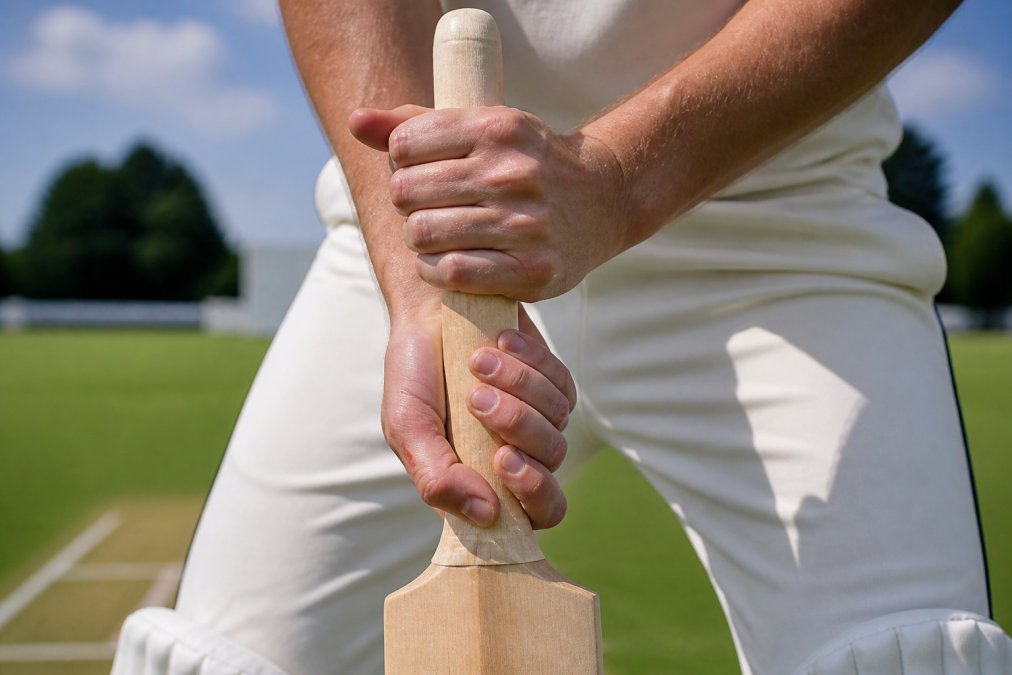
This single distinction changes your shot-making. The shape determines whether the bat face stays square to the ball by default, or whether you need active wrist work to bring it square at the point of contact. Neither is inherently better; each suits a different method of play.
Round Handles: Freedom of Wrist Movement
A round handle is the traditional choice for stroke players. Because the handle rotates easily, your bottom hand can whip the bat through the line late, which generates significant bat speed. This is why many players who favour cuts, pulls, and flicks prefer the round profile; it rewards timing and soft hands.
The trade-off is control. With a round handle, you must actively manage the bat face. If your wrists are lazy or your bottom hand is dominant in a rigid way, the face can close or open unexpectedly, leading to mistimed strokes.
Oval Handles: Locked-In Control
An oval handle gives you a consistent, repeatable face position. The flattened profile sits against your palm and fingers, preventing the bat from twisting on impact. For players who drive straight or punch off the back foot, this locked-in feel provides the confidence to hit through the line without worrying about the face closing.
The drawback is reduced wrist whip. The oval shape restricts the rotation that generates late bat speed. Players who try to cut aggressively with an oval handle often find the shot feels stiff and lacks the "pop" of a round handle.
Cricket Bat Handle Thickness and How It Feels
Handle thickness is the second half of the equation, and it changes how the bat feels in your hands just as much as the shape. Cricket bat handle thickness is measured by the circumference of the handle, and it directly affects your grip strength and wrist action.

A thicker handle places more rubber in your palm, which can reduce the feeling of the bat's position. This suits players with larger hands or those who grip the bat tightly. A thinner handle gives you more tactile feedback and makes it easier to rotate the bat, but it requires a more precise grip.
Many players overlook how thickness interacts with their batting gloves. A thick handle with thick gloves can feel like a tennis ball in your hand. A general rule is to match the handle to your hand size and your preferred grip pressure. If you find yourself gripping the bat too hard to control it, a thicker handle often solves the problem. If the bat feels dead and you cannot feel the splice, try a thinner profile.
How to Grip a Cricket Bat Correctly for Your Handle Shape
Knowing how to grip a cricket bat correctly is essential, because the ideal grip changes slightly depending on whether your handle is round or oval. The fundamentals stay the same: your top hand leads, your bottom hand supports, and both thumbs rest along the back of the handle.
For a round handle, keep your bottom hand relaxed. A death grip kills the wrist whip that makes a round handle effective. Your bottom hand should act as a guide, allowing the bat to rotate naturally as you swing. Think of your top hand as the engine and your bottom hand as the steering wheel.
For an oval handle, you can afford a firmer bottom hand. The flattened face gives you a reference point; you can feel when the bat is square without looking at it. Grip the handle so the flat face sits against the base of your fingers, not across your palm, to maintain flexibility through the wrists.
Choosing Cricket Bat Handle Shape for Your Playing Style
Choosing cricket bat handle shape for your playing style comes down to one honest question: do you generate power through timing or through force?
If you are a timing player who scores through late cuts, flicks, and lofted drives over the infield, a round handle will amplify your natural game. The wrist freedom creates bat speed that a rigid handle cannot match. This is the classic profile for a stroke maker.
If you are a back-foot player who punches off the seam, or a front-foot driver who hits straight, an oval handle gives you the control to hit through the line consistently. The locked-in face position reduces the margin for error on fast, straight deliveries.
| Your Playing Style | Best Handle Shape | Why It Works |
|---|---|---|
| Late cuts, flicks, wristy strokes | Round | Allows rotation and late bat speed |
| Straight drives, back-foot punches | Oval | Keeps the face square through impact |
| Mixed game, aggressive on both feet | Round (slightly thicker) | Balance of whip with control |
| Defensive, looking to rotate strike | Oval | Provides consistent, repeatable contact |
For juniors or players still developing their technique, an oval handle offers more forgiveness (ecb.co.uk). It trains the bat to arrive square without demanding active wrist control. As your game develops, you can transition to a round handle to add more scoring shots.
The SGM Custom Bat Advantage
This is where a custom bat earns its keep. When you choose a bat from a shop shelf, you are stuck with whatever handle profile the manufacturer decided was average. A custom bat builder lets you specify the cricket bat handle shape, thickness, and grip to match your hands and your technique.
At SGM Cricket Bats, every bat is handcrafted in our own factory, from cleft selection to final inspection. Our Custom Made Cricket Bats process lets you choose your willow grade, size, weight, and handle configuration. We guide you through the specifications if you are unsure, because we have seen how the right handle transforms a player's confidence.
The difference is tangible. A bat built around your grip feels like an extension of your arms, not a piece of equipment you are fighting to control. For club cricketers, the change in timing and shot placement can be significant.
Final Call on Handle Shape
There is no universally "correct" cricket bat handle shape, only the shape that matches your method. Start with your dominant shots. If you play with soft hands and rely on placement, choose a round handle. If you play straight and hard, choose an oval.
Then consider the thickness. Hold the bat, check the balance, and pay attention to how much feedback you feel through your bottom hand. If you can, test both shapes before committing. Many players are surprised to find they prefer the opposite of what they expected.
When you are ready to move beyond off-the-shelf compromise, a custom build removes the guesswork. With SGM Cricket Bats, you can specify a handle that fits your game and have it ready in three weeks, handcrafted in Melbourne.
Frequently Asked Questions
What is the difference between a round and oval cricket bat handle?
A round handle has a circular cross-section, letting your bottom hand rotate freely to whip the bat through the shot. An oval handle has a flattened profile that locks into your palm, preventing the bat from turning on impact. Round suits wristy, fluent players; oval suits straight, powerful hitters. Many modern bats use a semi-oval shape as a compromise.
Does handle shape affect the pick-up of a cricket bat?
Yes. The handle shape changes where the bat's mass sits in your hands when you take your guard. An oval handle aligns the blade face naturally with your forearm, which can make the bat feel more balanced and controlled at the crease. A round handle can feel lighter and more manoeuvrable for quick wrist work.
How do I know if I need a semi-oval handle?
If you find a full oval handle restricts your wrist work on the leg side, but a round handle allows the bat to twist on off-stump balls, try a semi-oval. It gives you the locked-in face position of an oval with more forgiveness for bottom-hand rotation. It is the most popular choice among club cricketers.
Can a custom cricket bat handle improve my batting technique?
A custom handle cannot change your technique, but it can remove the physical distractions that cause poor shots. The correct thickness and shape reduce bat twist and improve your grip comfort, letting you focus on timing and footwork. During your SGM bat build, you can specify your preferred handle profile to match your natural grip.
Are oval handles better for preventing the bat from turning in the hands?
Yes. The flattened edges of an oval handle sit against your palm and fingers, giving you a mechanical lock that stops the bat from rotating on mis-hits. This is why many bottom-handed players prefer them. The trade-off is less freedom for wristy flicks, so test the feel before you commit.
What handle thickness should I choose?
Your top hand should wrap around the handle with your fingers just touching the base of your thumb. If your fingers overlap significantly, the handle is too thin. If you cannot close your fingers fully, it is too thick. Junior players often need a thinner handle to develop correct grip habits and bat speed.
Getting the right bat is about more than the blade. The handle shape determines how the bat feels, how it swings, and how it performs under pressure. SGM Cricket Bats builds every bat to your exact specifications, from the English willow grade to the handle profile, so you step to the crease with confidence. Get started with SGM Cricket Bats and play with a bat built for your game.


