

Table of Contents
- What Makes the Best Cricket Batting Gloves in 2026
- Sausage Finger vs Split Finger Gloves: Which Should You Choose?
-
Top Cricket Batting Gloves for 2026: Ranked and Reviewed
- 1. SGM Cricket Batting Gloves Elite Sausage Fingers
- 2. Gunn & Moore 808 Batting Gloves
- 3. SS TON Player Edition Cricket Batting Gloves
- 4. Masuri T Line Batting Gloves
- 5. Spartan Sikander 5.0 Batting Gloves
- 6. Gray-Nicolls GN 600 Batting Gloves
- 7. New Balance Burn 500 Batting Gloves
- 8. Adidas XT 4.0 Cricket Batting Gloves
- Cricket Batting Glove Size Guide: Getting the Right Fit
- Club-Level vs Professional-Grade: Which Protection Do You Need?
- How to Maintain Cricket Batting Gloves and Extend Their Life
- Frequently Asked Questions
Last Updated: August 31, 2026
What Makes the Best Cricket Batting Gloves in 2026
Cricket batting gloves are essential protective gear. At SGM Cricket Bats, we consistently hear that premium-looking gloves often fail within a season, while the right pair lasts multiple seasons and reduces injury risk.
The best cricket batting gloves balance four things: impact absorption, breathability, fit, and durability. Get all four right and your gloves become invisible during an innings.
Below, we rank and review eight top gloves, break down what separates club-level from professional-grade protection, and provide a practical sizing and maintenance guide.
Quick Picks:
- Best Overall: SGM Cricket Batting Gloves Elite Sausage Fingers, lightweight, breathable, built for long innings
- Best for Advanced Protection: Masuri T Line, independently proven impact absorption technology
- Best Budget Option: New Balance Burn 500, solid protection at a competitive price
- Best Leather Feel: Gunn & Moore 808, calf leather palm, excellent grip
Key Protection Features to Prioritise
The most important protection zones are the fingers, thumb, and metacarpal knuckle area, these take the most punishment from fast bowling. Look for high-density foam padding across the back of the hand, finger roll or fibre inserts in sausage or split-finger sections, thumb guard or thumb claw reinforcement, side-bar protection along leading edge fingers, and velcro closure at the wrist for a snug, adjustable fit.
A glove that skimps on any of these zones is not professional-grade, regardless of marketing claims.
Material Breakdown: Sheep Leather vs Synthetic Palms
Sheep leather palm construction remains the gold standard for grip, feel, and durability. It conforms to the hand over time and holds up well across a full season of club cricket. Synthetic palms, typically PU-based, are lighter and more moisture-resistant short-term but wear faster and reduce tactile feedback that experienced batters prefer. For district-level and above, sheep leather palm gloves are the better investment.
Sausage Finger vs Split Finger Gloves: Which Should You Choose?
Sausage finger gloves use continuous padding across the fingers, creating a tube-like structure that wraps each finger individually. This design excels at absorbing direct impact from fast bowling and is favoured by most professional and district-level players.
Split-finger gloves divide finger protection into sections, allowing more natural bending and improved flexibility. The downside is that gaps between sections can be vulnerable to angled impacts at higher pace.
For club-level cricket, sausage finger gloves provide better all-round protection. For junior players still building hand strength, split-finger gloves offer a more comfortable starting point.
Top Cricket Batting Gloves for 2026: Ranked and Reviewed
Here are eight of the best cricket batting gloves available in 2026, ranked by overall value, protection quality, and durability.
Close-up of a cricket player's gloved hands gripping a bat handle at the crease, showing the sheep leather palm grip and sausage finger protection detail against a bright green outfield background
1. SGM Cricket Batting Gloves Elite Sausage Fingers
Best for: Modern players who demand both protection and performance, from T20 chases to long first-class innings.
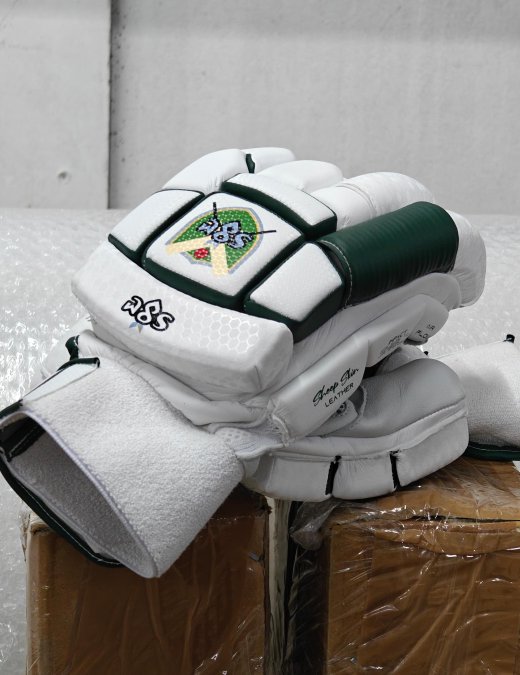
The Elite Sausage Fingers feature high-impact finger protection, advanced ventilation for heat and moisture management, and an ergonomic fit that keeps the glove snug without restricting grip. The ultra-lightweight construction delivers full sausage finger protection without dulling bat feel.
Pricing depends on quantity, dates, and delivery; please refer to the SGM Cricket Bats website for current prices.
Pros:
- Ultra-lightweight and breathable
- Full sausage finger protection without added bulk
- Durable construction designed for multiple seasons
- Excellent protection against fast pace and sharp spin
Cons:
- Specific internal foam technology details not itemised on product page
2. Gunn & Moore 808 Batting Gloves
The GM 808 features an exceptionally soft calf leather palm that provides superior grip and conforms quickly to the hand. Protection comes from shock-absorbing HD foam padding across the back of the hand, combined with HD foam and fibre overlaps with raw cotton finger rolls. The double-sided sweatband handles moisture well during long stints at the crease.
Starting price: A$119.00
Pros:
- Superior grip from calf leather palm
- Comprehensive HD foam and fibre overlap protection
- Excellent moisture management
Cons:
- Heavier than some lightweight alternatives
3. SS TON Player Edition Cricket Batting Gloves
The SS TON Player Edition features premium English Pittard leather palm sourced from the UK, widely regarded as among the finest leather used in cricket gloves. Internal protection uses white Korean PU combined with a lightweight XL sheet for superior impact resistance. Fully ventilated finger construction with nylon gussets actively removes sweat.
Starting price: A$129.00 (was A$149.00)
Pros:
- Pittard leather palm for exceptional feel and durability
- Fibre inserts and XL sheet for enhanced impact absorption
- Effective ventilation system
Cons:
- Higher price point than mid-range options
4. Masuri T Line Batting Gloves
Masuri's T Line gloves feature META SHIELD, which provides targeted protection for the metacarpal knuckle area, and THUMB CLAW for reinforced thumb tip protection. PRO FOAMS are independently proven to provide greater impact absorption than standard foams, according to Masuri's product testing documentation. The sheepskin palm is durable and breathable.
Pros:
- Targeted metacarpal and thumb tip protection
- Independently tested impact absorption technology
- Breathable sheepskin palm
Cons:
- Pricing not publicly listed; contact retailer
5. Spartan Sikander 5.0 Batting Gloves
Built to test match standards, the Sikander 5.0 features premium calf leather that improves with use, while fibre inserts in full sausage fingers deliver district and representative-level protection. This traditional glove offers proven construction without gimmicks.
Pros:
- Premium calf leather for soft feel and long-term durability
- Fibre inserts for serious impact protection
- Traditional sausage finger construction favoured by professionals
Cons:
- Pricing not publicly listed; contact retailer
6. Gray-Nicolls GN 600 Batting Gloves
The GN 600 uses a combination of high-density and low-density foam to manage both direct impact absorption and vibration dampening. The super-flex two-piece thumb design offers exceptional comfort without sacrificing protection. Mesh gussets provide solid ventilation, and dual-sided sweatbands handle moisture effectively.
Pros:
- Dual-density foam for impact and vibration management
- Excellent two-piece thumb flexibility
- Good ventilation through mesh gussets
Cons:
- Pricing not publicly listed; contact retailer
7. New Balance Burn 500 Batting Gloves
The New Balance Burn 500 delivers solid value at its price point. Imported PU finger roll material provides reliable protection across all fingers, while the sheep leather palm offers a natural feel that outperforms expectations at this price. Crosslink foam padding handles impact reasonably well for club-level play.
Starting price: A$60.00 (was A$80.00)
Pros:
- Competitive price point with sheep leather palm
- Solid PU finger roll protection
- Ventilated gusset for breathability
Cons:
- Not suited to professional or district-level play
8. Adidas XT 4.0 Cricket Batting Gloves
The Adidas XT 4.0 uses TPU shell construction in the lead finger sections. TPU is a rigid polymer that absorbs and deflects impact differently from foam, providing a hard outer shell over the most exposed fingers. Pittards leather on the thumb tip adds durability to the highest-wear point.
Pros:
- TPU shell provides hard outer protection on lead fingers
- Pittards leather thumb tip for durability
- Curved finger sections improve flexibility
Cons:
- Pricing not publicly listed; contact retailer
Glove |
Palm Material |
Finger Style |
Starting Price |
Best For |
|---|---|---|---|---|
SGM Elite Sausage Fingers |
Leather |
Sausage |
A$120.00 |
All-round protection and performance |
Gunn & Moore 808 |
Calf leather |
Sausage |
A$119.00 |
Superior grip and feel |
SS TON Player Edition |
Pittard leather |
Sausage |
A$129.00 |
Professional-grade durability |
Masuri T Line |
Sheepskin |
Hybrid |
Contact retailer |
Advanced targeted protection |
Spartan Sikander 5.0 |
Calf leather |
Sausage |
Contact retailer |
Traditional test-match construction |
Gray-Nicolls GN 600 |
Quality leather |
Sausage |
Contact retailer |
Balanced protection and flexibility |
New Balance Burn 500 |
Sheep leather |
Finger roll |
A$60.00 |
Budget-conscious club players |
Adidas XT 4.0 |
Reinforced leather |
TPU split |
Contact retailer |
Modern structured protection |
Cricket Batting Glove Size Guide: Getting the Right Fit
A snug fit is essential. A glove that's too loose shifts during the innings and reduces palm grip. A glove that's too tight restricts blood flow and limits natural hand movement.
Most manufacturers size adult batting gloves as Small, Medium, Large, and Extra Large. The most reliable measurement is hand circumference taken around the widest part of the palm, excluding the thumb:
- Small: up to 19cm hand circumference
- Medium: 19-21cm
- Large: 21-23cm
- Extra Large: 23cm and above
Junior sizing typically runs from Size 0 through to Size 6, which bridges into adult sizing. If a junior player's hand measurement puts them between a Size 6 junior and a Small adult, try both before deciding.
According to Cricket Australia's equipment guidelines, properly fitted protective gear is essential at all levels of the game.
Fit-Testing Protocol Before You Buy
Use this protocol before committing to a pair: Put both gloves on fully and fasten the velcro closure at the wrist. Grip a bat handle with both hands in your natural stance, the glove should not bunch at the palm or pull tight across the knuckles. Check that there is no more than 5mm of space beyond your fingertip inside the glove. Flex all four fingers toward the palm repeatedly to ensure movement feels natural, not restricted. Finally, check the thumb guard position to ensure the thumb protection sits over your thumb tip without the glove pulling away when you extend your thumb.
Club-Level vs Professional-Grade: Which Protection Do You Need?
Club-level gloves use standard foam padding, basic finger roll construction, and synthetic or entry-level leather palms. They're adequate for recreational cricket where ball speeds are lower but wear faster.
Professional-grade gloves use high-density foam, fibre inserts, reinforced metacarpal knuckle protection, and premium leather palms. They're built to absorb repeated impacts across a full season without degrading.
If you're playing district-level cricket or above, or regularly facing fast bowling in nets, professional-grade gloves are worth the investment. For social club cricket played once a week, a mid-range glove handles the job adequately.
How to Maintain Cricket Batting Gloves and Extend Their Life
Most batting gloves fail prematurely due to poor maintenance, not poor construction. A simple care routine can extend the life of a quality pair by a full season or more.
A pair of cricket batting gloves laid flat on a wooden surface beside a soft cloth and leather conditioner, showing the sheep leather palm and velcro wrist strap in warm natural light
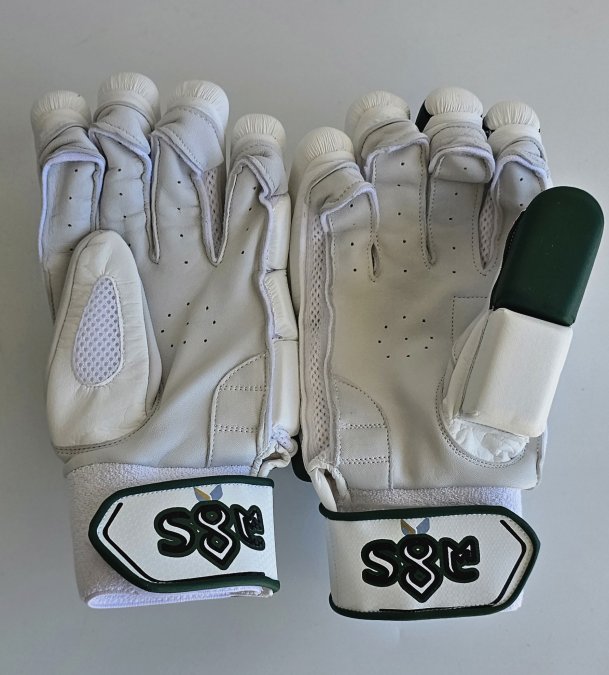
After each session, air the gloves out fully before storing them. Folding them into a bag while damp accelerates breakdown of both the leather palm and internal foam padding. For leather palm gloves, apply a small amount of leather conditioner to the palm every four to six weeks during the season to prevent cracking and maintain grip. Keep the velcro wrist closure free of debris by brushing it lightly before and after use.
Glove Longevity and Wear-and-Tear: What to Watch For
Inspect the finger protection regularly. Press firmly on the sausage finger sections from the outside. If the internal foam has compressed into a flat, dense layer without spring, the impact absorption is compromised.
Check the palm for cracking or separation. Sheep leather palm gloves that have dried out without conditioning will crack along crease lines. Deep cracks that penetrate through the leather mean the palm is no longer providing reliable grip.
Examine the side-bar protection on the leading edge fingers. This area takes direct hits regularly and protective material can shift or compress unevenly. If the side-bar has moved out of position, the glove needs replacing.
A well-maintained pair of professional-grade gloves should last a full club season of weekly matches plus regular net sessions.
Maintenance Task |
Frequency |
Why It Matters |
|---|---|---|
Air out after each session |
Every use |
Prevents foam and leather degradation |
Leather conditioning |
Every 4-6 weeks |
Stops palm cracking, maintains grip |
Velcro cleaning |
Weekly |
Extends closure lifespan |
Finger foam inspection |
Monthly |
Confirms impact absorption is intact |
Side-bar position check |
Monthly |
Ensures leading edge protection is in place |
Full replacement assessment |
Each season |
Worn gloves provide false confidence |
For further guidance on cricket protective equipment standards, refer to the Marylebone Cricket Club's Laws of Cricket and equipment specifications, which outline the protective gear requirements applicable at all levels of the game.
Frequently Asked Questions
What features should I look for in professional-grade cricket batting gloves?
Focus on four areas: palm material (sheep leather or Pittards leather gives the best grip and durability), padding density (high-density foam or fibre inserts in the finger rolls absorb the most impact), ventilation (perforated backs and mesh gussets reduce sweat build-up during long innings), and wrist closure (a double-sided sweatband with velcro keeps the glove secure without restricting movement). For district-level and above, look for reinforced thumb guards and side-bar protection as standard.
What is the difference between sausage-finger and split-finger batting gloves?
Sausage finger gloves wrap each finger in a continuous roll of high-density foam and cane protection, offering maximum shock absorption. They are the traditional choice for professional and district-level players facing fast pace. Split-finger gloves separate the index and middle fingers with a two-piece design, improving flexibility and grip feel on the bat handle. Players who prioritise comfort and natural hand movement often prefer the split-finger design, while those facing express pace tend to favour sausage fingers for reinforced protection.
How do I determine the correct size for cricket batting gloves?
Measure around the widest part of your hand (excluding the thumb) with a soft tape measure in centimetres. Most manufacturers size gloves as Small, Medium, Large, and Extra Large, with youth sizes listed separately. The glove should feel snug at the palm with fingers reaching the tip of each finger section without bunching. If your measurement falls between sizes, go up — a slightly larger glove is safer than one that restricts circulation during long innings.
How often should I replace my cricket batting gloves?
The palm grip and finger roll padding are the first areas to fail. For players training and playing two to three times per week, a quality pair of batting gloves generally lasts one full season before the sheep leather palm shows significant wear and the foam padding compresses noticeably. Check the palm for cracking or thinning, and press the finger rolls — if they no longer spring back, the impact absorption has degraded. At that point, replace them regardless of how the exterior looks.
Are premium leather batting gloves worth the investment for club players?
For club and district-level cricketers who bat regularly, yes. A sheep leather or calf leather palm provides noticeably better grip and moulds to the hand over time, reducing hand fatigue during long innings. The durability also means a quality pair often outlasts two or three budget synthetic alternatives, making the per-season cost comparable. If you are facing spin and pace regularly in competitive matches, the improved shock absorption from high-density foam in premium gloves also reduces the risk of finger bruising and joint stress.


